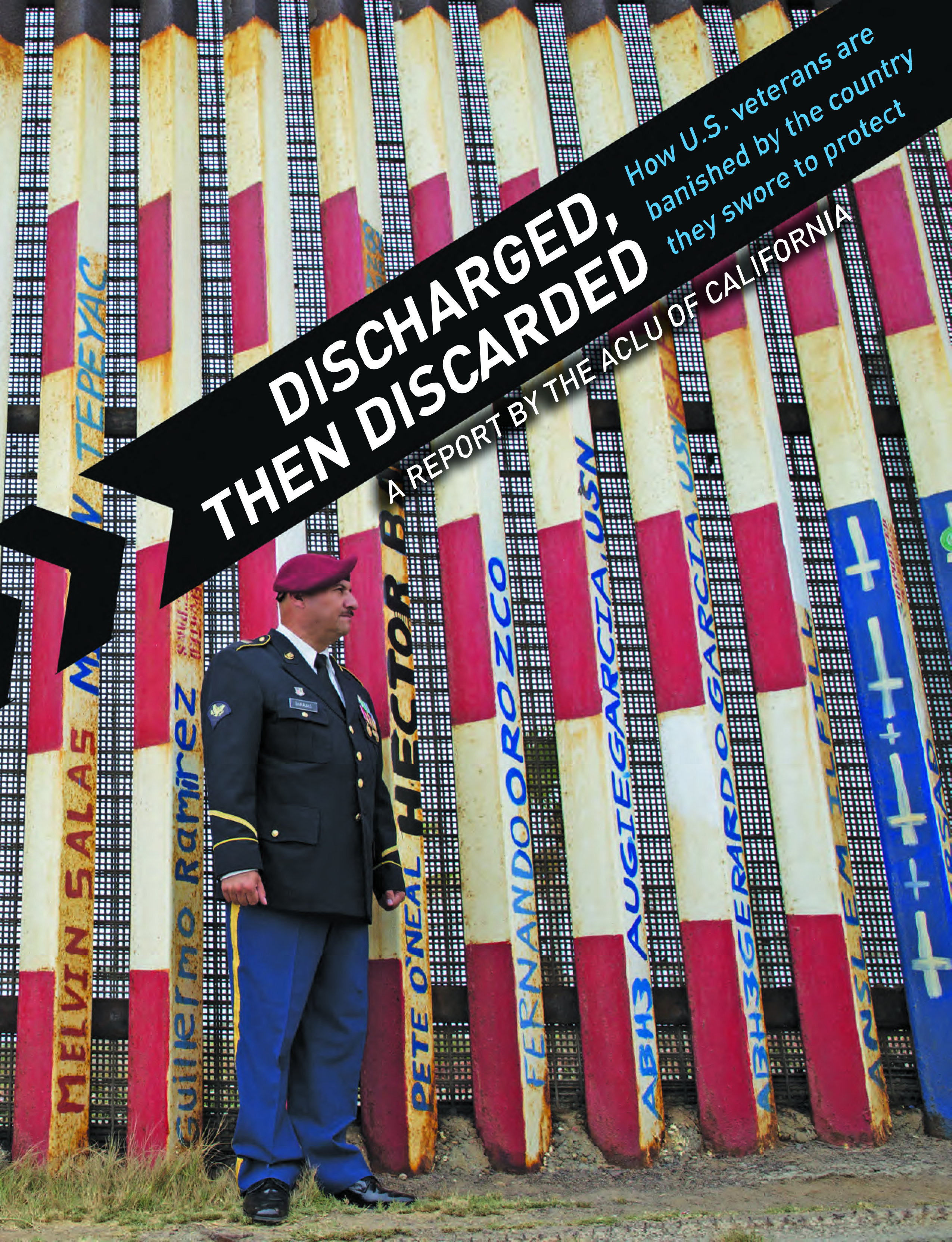
Discharged, Then Discarded, a report by the ACLU of California, examines the plight of deported veterans.
The report features a number of veterans who were in the U.S. legally and sustained physical wounds and emotional trauma in conflicts as far back as the war in Vietnam. Once they returned from service, however, they were subject to draconian immigration laws that reclassified many minor offenses as deportable crimes and were effectively banished from this country.
The report also provides key recommendations, including:
- Restoring judicial discretion to allow judges to consider factors such as military service in cases involving deportation.
- Requiring U.S. Immigration and Customs Enforcement (ICE) to adopt an agency-wide moratorium on and/or presumption against removal of any active-duty U.S. service member or honorably discharged veteran.
- Reopening those naturalization applications that were denied or abandoned because an individual was unable to follow through on the naturalization process as a result of their military service.
- Providing legal representation to active-duty U.S. service members and veterans who are in removal proceedings.
Read the full report
Date
Thursday, July 7, 2016 - 6:30pm
Featured image
Show featured image
Hide banner image
Related issues
Immigrants' Rights
Documents
Show related content
Pinned related content
Deported Marine Corps. Vet Marco Chavez Returns to U.S. Thursday
Deported Marine Corps Veteran Marco Chavez Returning to U.S. After 15 Years in Exile
ACLU Report Details How U.S. Has Failed Deported Veterans
Tweet Text
[node:title]
Share Image
Type
Menu parent dynamic listing
Show PDF in viewer on page
Style
Standard with sidebar
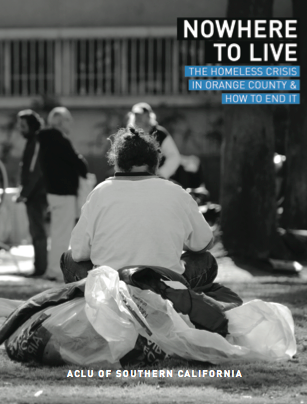
Nowhere to Live: The Homeless Crisis in Orange County & How to End It, a report by the ACLU of Southern California's Dignity For All Project, finds that since the OC Board of Supervisors approved a Ten-Year Plan to eradicate homelessness in 2010, the homeless crisis has grown more acute.
Read the report
On any given night, there are over 4,400 people in the OC sleeping on the streets.
The report found that county officials failed to follow their own blueprint, which recommends helping individuals who are homeless move into "safe and affordable permanent housing as an immediate response to their crisis."
The ACLU SoCal urges county officials to:
- Develop a plan that increases permanent supportive housing for people who are chronically homeless by 740 beds.
- Close the county's housing affordability gap to meet the needs of people who are not disabled or experiencing long-term homelessness.
- Create a dedicated source of funding — such as a housing trust fund to pay for permanent supportive and affordable housing.
- Take the lead in decriminalizing homelessness by ending county bans on sitting, sleeping or resting in public places and by penalizing cities that enforce such bans.
Date
Monday, August 8, 2016 - 8:45am
Featured image
Show featured image
Hide banner image
Related issues
Economic Justice
Documents
Show related content
Tweet Text
[node:title]
Type
Menu parent dynamic listing
Show PDF in viewer on page
Style
Standard with sidebar
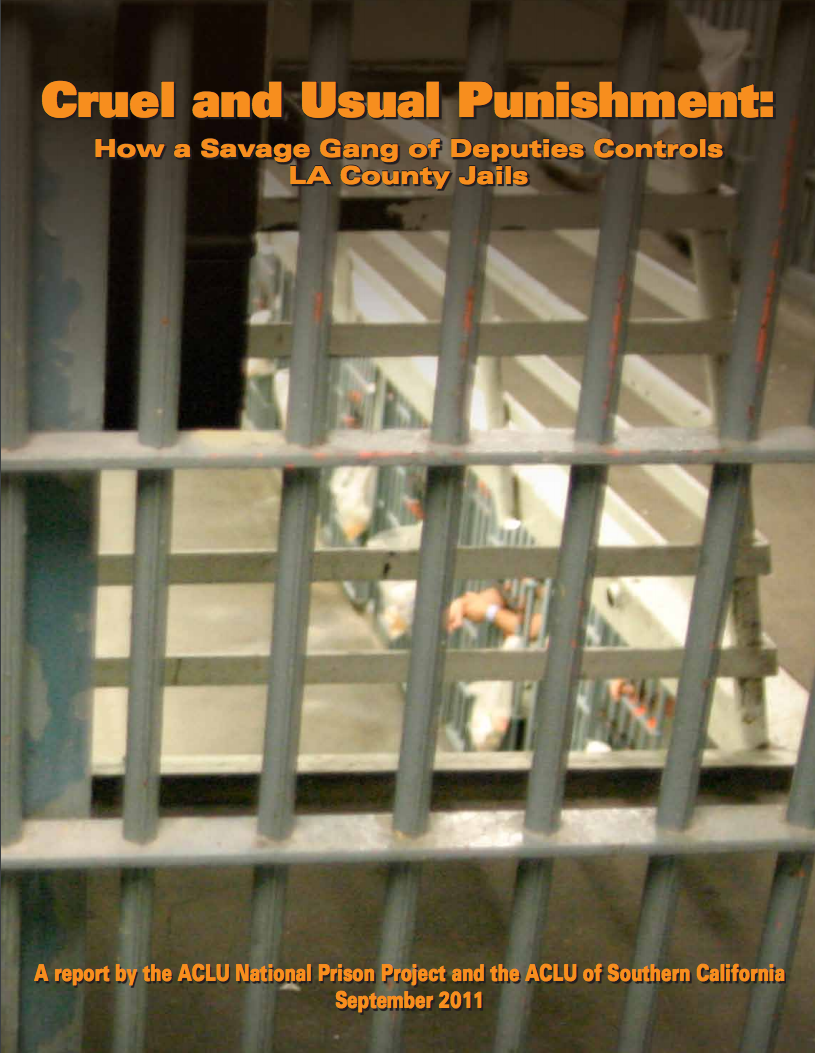
To be an inmate in the Los Angeles County jails is to fear deputy attacks. In the past year, deputies have assaulted scores of non-resisting inmates, according to reports from jail chaplains, civilians, and inmates. Many attacks are unprovoked. Nearly all go unpunished: these acts of violence are covered up by a department that refuses to acknowledge the pervasiveness of deputy violence in the jail system.
Deputies act with such impunity that in the past year even civilians have begun coming forward with eyewitness accounts of deputies beating non-resisting inmates in the jails. These civilian accounts support the seventy inmate declarations describing deputy-on-inmate beatings and deputy-instigated inmate-on-inmate violence and deputy threats of assaults against inmates that the ACLU Foundation of Southern California (ACLU/SC) has collected in the past year, as well as the myriad inmate declarations the ACLU/SC has collected over the years.
“To this day, recalling the beating brings tears to my eyes, and I cannot finish talking about it without taking a few moments to compose myself.”
— Chaplain Paulino Juarez, describing a 2009 beating by deputies of an inmate in Men’s Central Jail.
“I was so shocked that despite the deputies seeing me watch them beat up the inmate, they continued to kick and beat him. It was like they didn’t even care that there was a witness”
— Chaplain Doe, describing a 2011 beating by deputies of an inmate in Men’s Central Jail.
“To an astonishing extent, unchecked violence, both deputy-on-inmate and inmate-upon-inmate, permeates Men’s Central Jail and Twin Towers jails, which are components of the Los Angeles County Jails, managed by the Los Angeles County Sheriff’s Department under the leadership of Sheriff Leroy Baca. … The voluminous evidence I have reviewed cries out for an independent, far-reaching, and in-depth investigation by the Federal Government. The problem can no longer be ignored.”
— Thomas Parker, former Assistant Special Agent in Charge of the FBI’s Los Angeles Field Office.
Date
Thursday, September 1, 2011 - 12:00am
Featured image
Show featured image
Hide banner image
Related issues
Police Practices
Documents
Show related content
Tweet Text
[node:title]
Type
Menu parent dynamic listing
Style
Standard with sidebar
Pages