
News & Commentary
Jun 07, 2013
Yoo has nothing to fear. Should we?
By Hector Villagra, Executive Director, ACLU/SC
On Wednesday, June 5th, the ACLU of Southern California’s Ahilan Arulanantham took part in a public discussion concerning the Obama Administration’s targeted killing program. Speaking alongside Mr. Arulanantham was John Yoo, formerly with the Department of Justice’s Office of Legal Counsel during the Bush Administration.
By Marcus Benigno


May 16, 2013
ACLU/SC's Statement on the End of the LAPD's Consent Decree
By Hector Villagra, Executive Director, ACLU of Southern California
The consent decree secured by the ACLU Foundation of Southern California and the Justice Department accomplished its purpose by and large. This is no longer your father’s Los Angeles Police Department.
By Marcus Benigno
May 15, 2013
ACLU/SC: It All Began With an Arrest in 1923
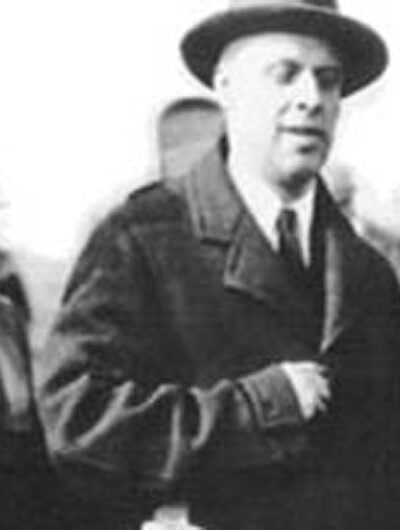
On May 15, 1923, angered by the LAPD's brutal treatment of striking longshoremen, journalist and novelist Upton Sinclair appeared at a rally in San Pedro. Because the police banned all public meetings by the unionized strikers, the rally was held, with the owner's written permission, on private property prophetically named "Liberty Hill." Sinclair began reading the First Amendment.
By Hector Villagra, Stephen Rohde
May 06, 2013
Automated License Plate Readers Threaten Our Privacy
Law enforcement agencies are increasingly using sophisticated cameras, called “automated license plate readers” or ALPR, to scan and record the license plates of millions of cars across the country.
By Peter Bibring


Apr 29, 2013
Advocating for LGBTQ Youth
by Joey Hernandez, LGBTQ Student Rights Advocate
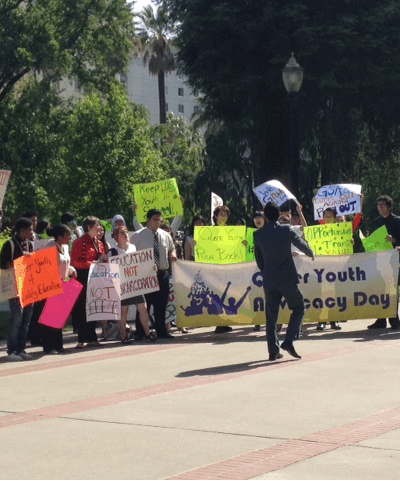
Over the years, the north steps of the State Capitol have seen some fierce advocacy by queer youth from across the state of California. The ACLU of California is keeping that legacy alive in the 2013 legislative cycle.
By Glen Eichenblatt
Apr 29, 2013
Our True Americanness
by Hector Villagra, Executive Director of the ACLU of Southern California
Historian Eric Foner has said that "[l]ike all great historical transformations, emancipation was a process, not a single event. It arose from many causes and was the work of many individuals."
We are now living through and are on the verge of a great historical transformation, as evidenced by the release of the so-called gang of eight's long-awaited immigration proposal. This transformation, some 20 years in the making, has definitely been a process.
By Glen Eichenblatt
Stay Informed
Sign up to be the first to hear about how to take action.
By completing this form, I agree to receive occasional emails per the terms of the ACLU’s privacy statement.
By completing this form, I agree to receive occasional emails per the terms of the ACLU’s privacy statement.