
News & Commentary
Jun 21, 2018
Open Letter: End California's Poverty Crisis
Dear Governor Brown, Senate President Pro Tempore Toni Atkins and Assembly Speaker Anthony Rendon:
Today at the United Nations, Phillip Alston, the special rapporteur on extreme poverty and human rights, condemned the U.S. and the state of California in a report that details failures to protect the
By Clarissa Woo Hermosillo

Jun 11, 2018
California, Say Her Name
As stories of state violence against Black men and boys occupy many of the calls for police reform, countless stories of Black women and girls subjected to excessive force and police misconduct remain untold. We must say their names.
By Novella Coleman

Jun 06, 2018
Running for Elected Prosecutor Will Never Be the Same
On June 5, California voters paid more attention to their local top prosecutor races than ever before.
In elections where the incumbent has historically gone unchallenged, there were more contested DA races in California than in recent memory — or perhaps ever before. Although incumbents retained
By Yoel Haile
Jun 04, 2018
OC Voters Have the Power to Demand Justice for Deaths in County Jails
Danny Pham, a 27-year-old Westminster native, was serving a six-month sentence in an Orange County jail for a non-violent offense. He was close to completing his sentence. Instead, he ended up dead.
By Esther Lim, Daisy Ramirez
May 02, 2018
A New Bill Restores California’s Power to Fight Secret Surveillance
Law enforcement agencies are deploying secret and invasive surveillance technologies to collect sensitive location and biometric data, target local activists, and feed ICE's deportation machine. Technologies like drones, social media surveillance, and license plate readers have invaded people's private lives and are being exploited by the federal government to tear California families apart.

Apr 16, 2018
California Can Reduce the Number of Police Shootings. Here’s How.
Police in California have a problem with deadly force. Last year, police shot and killed 162 people in the state, half of whom did not have guns. California departments have some of the highest rates of killings in the nation. In a 2015 report, for example, the Guardian identified central California's Kern County as the place where a member of the public is most likely to die at the hands of police.
By Peter Bibring

Apr 14, 2018
Now is the Time for California Families and Communities to Advocate for Strong Sanctuary Policies in K-12 Schools
Last week, California Attorney General Xavier Becerra provided all California public school leaders with the policies they must adopt by July to protect students from immigration enforcement while at school.
By Private: Ana Mendoza

Mar 28, 2018
Greyhound Has a Choice on Warrantless Searches
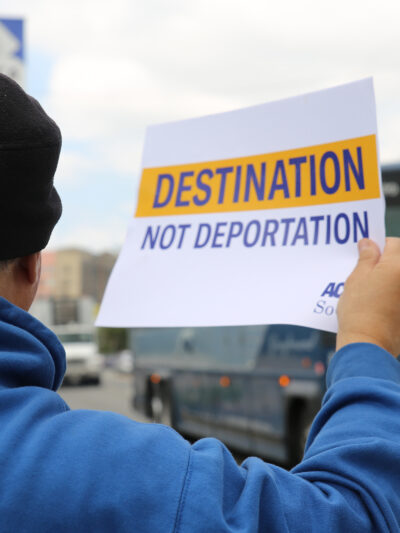
It's a scene out of a dystopian police state: Your bus pulls into the station after a long ride, but before you can get off, law enforcement agents board and make their way down the aisle, peering at passengers. They see brown skin, or hear a foreign accent, and stop to demand identification, then proof of citizenship. Those who don’t satisfy their questions are escorted off the bus.
Mar 26, 2018
Arming Teachers and Putting More Armed Cops on Campus Jeopardizes Safety
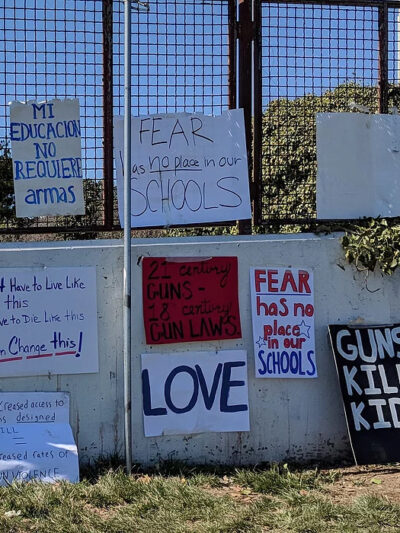
Students deserve to attend supportive and well-resourced schools, where they feel safe. And, as students across the country are calling for common sense gun control, the Trump administration has instead proposed to “harden” schools by increasing the numbers of armed police in schools and by arming teachers and school staff. These proposals, while cloaked in the language of “school safety,” are most likely to hasten the process of transforming schools into something more akin to penal institutions while increasing the risk to students.
By Sylvia Torres-Guillén, Harold Jordan
Stay Informed
Sign up to be the first to hear about how to take action.
By completing this form, I agree to receive occasional emails per the terms of the ACLU’s privacy statement.
By completing this form, I agree to receive occasional emails per the terms of the ACLU’s privacy statement.