
Earlier this fall, our legal team faced an extraordinary challenge: arguing two major civil rights cases simultaneously in the federal courthouse in downtown Los Angeles. As the ACLU SoCal’s legal and advocacy director, I felt the weight of what was at stake—both cases raised important legal questions, with consequences that would reach far beyond the courtroom. But above all, I felt an enormous sense of pride watching my colleagues pour their talent, energy and commitment into defending our communities.
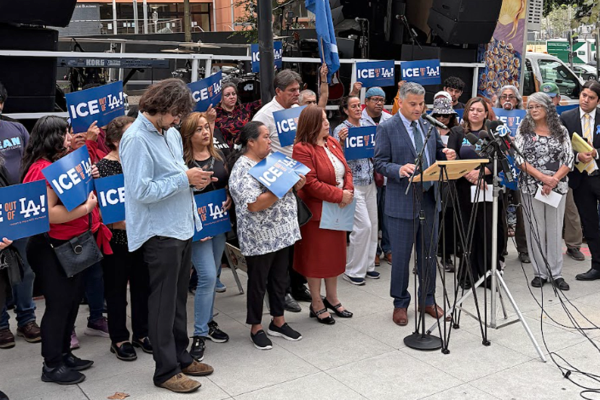
Even before I turned the corner towards the courthouse, I could already hear the buzz of the crowd gathered outside for a press conference. Cameras and reporters surrounded our team to cover Vasquez Perdomo v. Mullin, our lawsuit challenging discriminatory immigration enforcement practices, including unlawful racial profiling and suspicionless stops conducted by federal agents. The press conference was alive with music, joy and solidarity. Our clients spoke first. Street vendors and car wash workers shared how they came to this country to work, support their families and build a life. Instead, they were arrested and detained in deplorable conditions, targeted only because of their skin color, the language they speak and the work they do. Although the legal arguments to come were complex, our clients drove home why we were there. The case is ultimately about whether people can go to work and care for their families without fear of being singled out because of who they are. It is about the basic promise that everyone in this nation deserves to be treated with dignity.
The hearing that followed was a marathon, stretching past lunch and deep into the afternoon, with attorneys from Munger, Tolles & Olson and the ACLU SoCal presenting detailed evidence showing that the sweeping and brutal immigration raids targeting Southern California over the past year are unconstitutional.
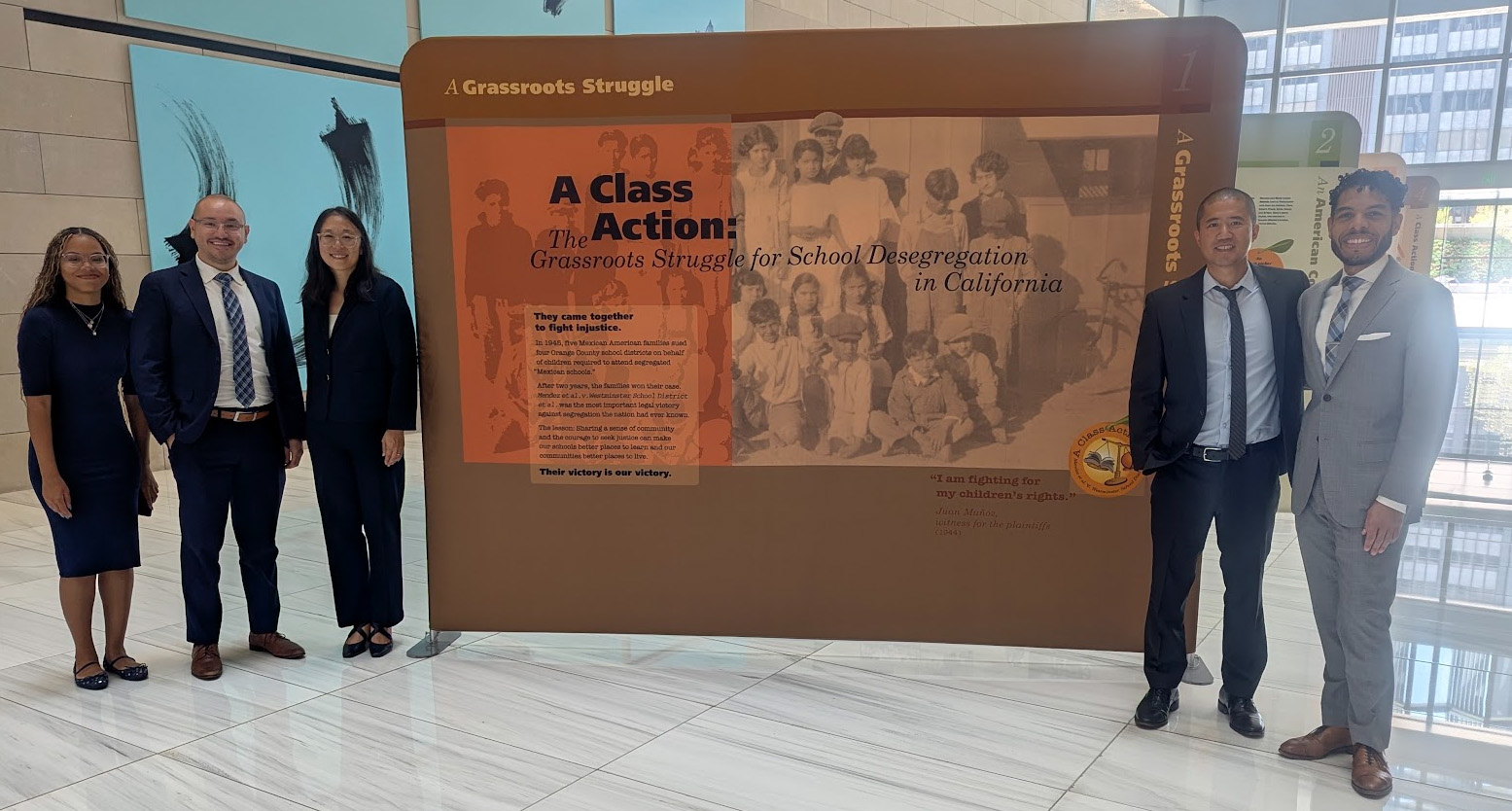
As I moved between the hearings, I looked down into the courthouse lobby at an exhibit commemorating the history of K–12 school desegregation litigation across the southland. It featured Latine students who had bravely stood up for themselves and their peers, echoing the clients who had just shared their experiences outside. It felt especially fitting to see this history on display, as we prepared to argue 1776 Foundation v. LAUSD, a case in which a conservative organization and the U.S. Department of Justice are seeking to overturn a longstanding desegregation order governing the Los Angeles Unified School District.
This case reaches deep into our affiliate’s history. In 1963, the ACLU SoCal filed a lawsuit challenging racial segregation in LAUSD schools. Decades of litigation culminated in a landmark 1981 state court order requiring the district to address the harms of that discrimination. The protections established by this case have shaped educational opportunities for millions of Los Angeles students in the ensuing decades, and the order continues to affect the more than 300,000 students attending LAUSD schools today. We are fighting to ensure that this legacy is not dismantled and that Los Angeles students can continue to benefit from the protections secured through generations of civil rights advocacy.
Moving between these two hearings, I was struck by both the distinct challenges our teams faced and the common purpose that united them. One case centered on the government’s power to stop and detain people in our communities; the other concerned the obligation to confront the lasting effects of racial discrimination in our schools. At heart, they are both about what kind of nation we choose to be. In both courtrooms, our attorneys presented thoughtful, forceful arguments about the principles of equality and fairness.
The arguments that day represented sleepless nights, deep collaboration with our partners and co-counsel and an unwavering commitment to justice. The preparation was well worth it. Both hearings were promising, and we are now awaiting the courts’ decisions. There are no guarantees, and the work will continue no matter the outcome. But that day offered a powerful view of what civil rights advocacy looks like in practice: clients courageously sharing their experiences, community partners standing together in solidarity, and dedicated legal teams fighting to protect fundamental rights.
I left the courthouse deeply proud of our staff and grateful to everybody who makes this work possible. From the stories about racial targeting shared on the courthouse steps, to the history of desegregation commemorated in the courthouse lobby, to the legal arguments unfolding upstairs, the day was a reminder that the struggle for justice spans generations and the full spectrum of our civil rights. Our responsibility is to carry that work forward with a holistic commitment to civil rights, fighting for a future where everyone can live with dignity, every child has the opportunity to thrive and our constitutional promises extend to all.