
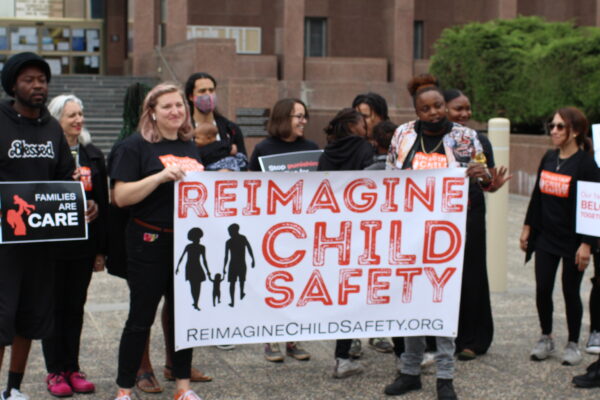
Imagine a near future where all American children grow up in households with adequate food, water, housing, education, and healthcare. Where children are raised by their parents and relatives, taught their family histories, can taste their elders’ recipes and attend their extended family’s parties and graduations. Where, instead of experiencing a social and political push towards homogeneity and assimilation, children are free to honor their heritage and get to witness cross-cultural differences and diversity celebrated in their neighborhoods.
The reality is this: there is a long American tradition of tearing families apart and government stealing the children of those are who are not rich and white. That tradition continues today.
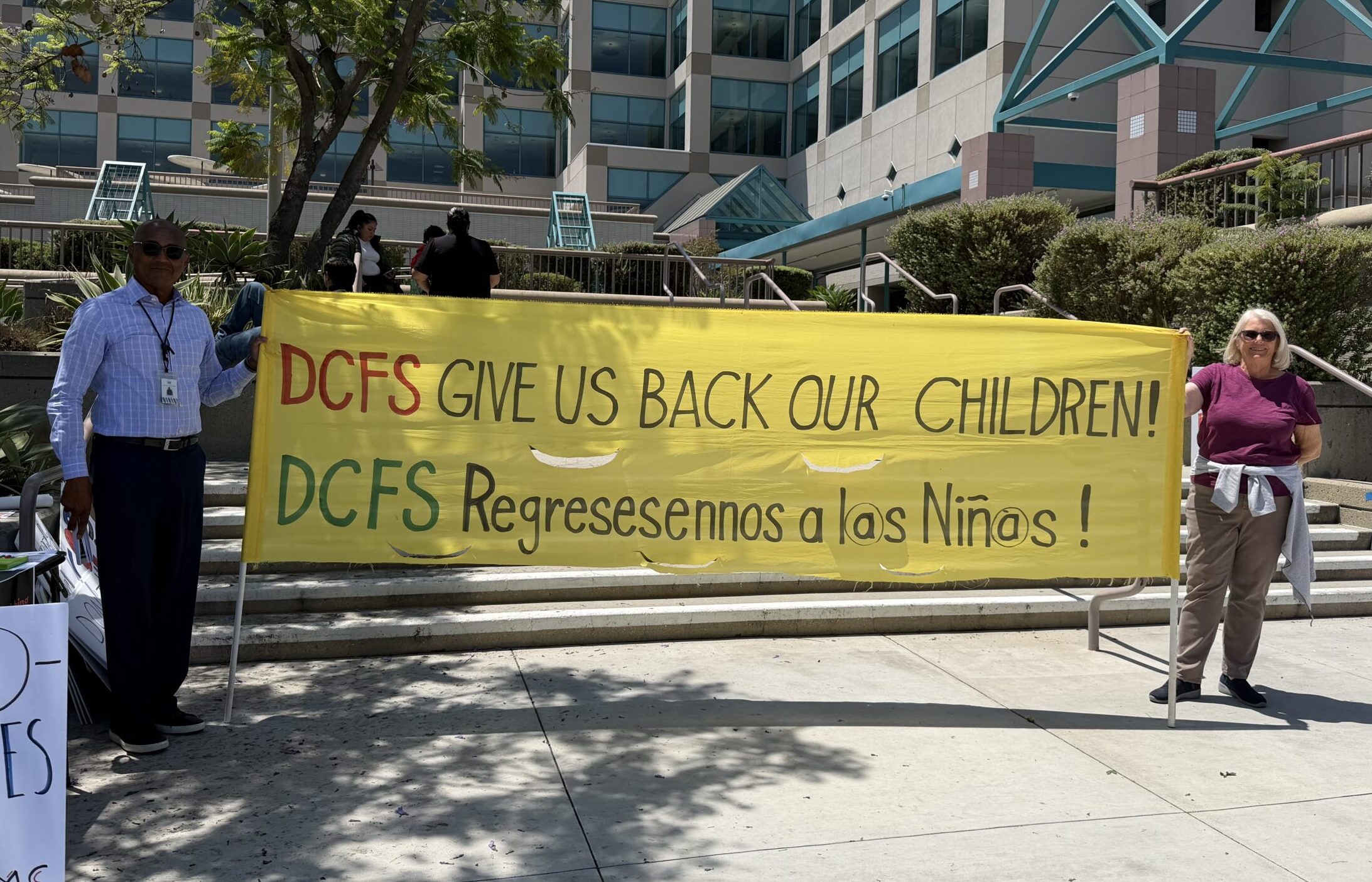
Last year, Movement for Family Power's Storyteller-in-Residence, Ashley Albert, declared June Stolen Children’s Month. According to the campaign’s website, their aim is to “end state kidnapping of children and cultivate[…] communities of care for impacted families to heal and repair.” They also intend to: “honor children stolen by: family policing and foster ‘care’; the ICE machine; youth incarceration; private adoption industries; [and] forced treatment facilities.” This demonstrates how our fight for reproductive and family parenting rights is connected to our fight for immigrants’ rights, disability rights, and the dismantling of the carceral system.
The government has destabilized low-income communities of color for centuries through the practice of family separation. A nationwide process of reunification and repair is long overdue.
From the 17th century through the 19th century, nearly 13 million enslaved African people were forcibly brought to the Americas. It’s estimated that nearly half of all enslaved African Americans were separated from their spouses and parents, and a quarter of those sold and taken from their families were children. In Help Me to Find My People: The African American Search for Family Lost in Slavery, author Heather Andrea Williams writes, “[t]he loss of their families during slavery weighed heavily on African Americans. It was wrenching […] some children learned, a large part of what made someone [enslaved] was the vulnerability to being sold and the powerlessness to prevent the loss of parents, siblings, spouses, family.”
From the 19th century through the 1970s, the federal government erected over 400 boarding schools for Native American youth and forcibly removed scores of Indigenous children from their families and communities. In our recent Tribal consultation report, we shared how the boarding school system “aimed to sever children’s ties to their community values, beliefs, language, and culture through ‘systematic militarized and identity-alteration methodologies’ in attempted ethnocide […] [t]he legacies of these historically violent policies and practices continue to harm Native American students, who are disproportionately impacted by intergenerational transference of trauma.”
Today, immigrant families are torn apart at the border and throughout the country. According to a recent report, over 6,000 children have already been detained in Trump’s second term. Journalists Anna Flag and Shannon Hefferman of the Marshall Project write, “President Joe Biden ended family detention in 2021 and, by the final year of his presidency, ICE was holding a daily average of 24 children in custody. But after Trump revived the policy last year, the number jumped tenfold, to 226 children incarcerated on the average day since he came back into office.”
Today, poor American families across the country are torn from their children simply for not being able to afford the country’s skyrocketing housing and food costs. Black children in California are overrepresented in the family policing system at a rate three times their general population, the most disproportionate share in the country. Scholar Abigail Mitchell writes, “the echoes of chattel slavery’s punitive family separations still reverberate today through the modern legal separation of mostly Black children from Black parents.”
—If you are outraged that the Supreme Court may soon allow the government to reach into your womb and control whether you have children, you should be deeply outraged that every day the government reaches into the living rooms of Black, brown and Indigenous families and separates children from their parents and guardians.”
Tauheedah Shakur, 2022, Reimagine Child Safety coalition member
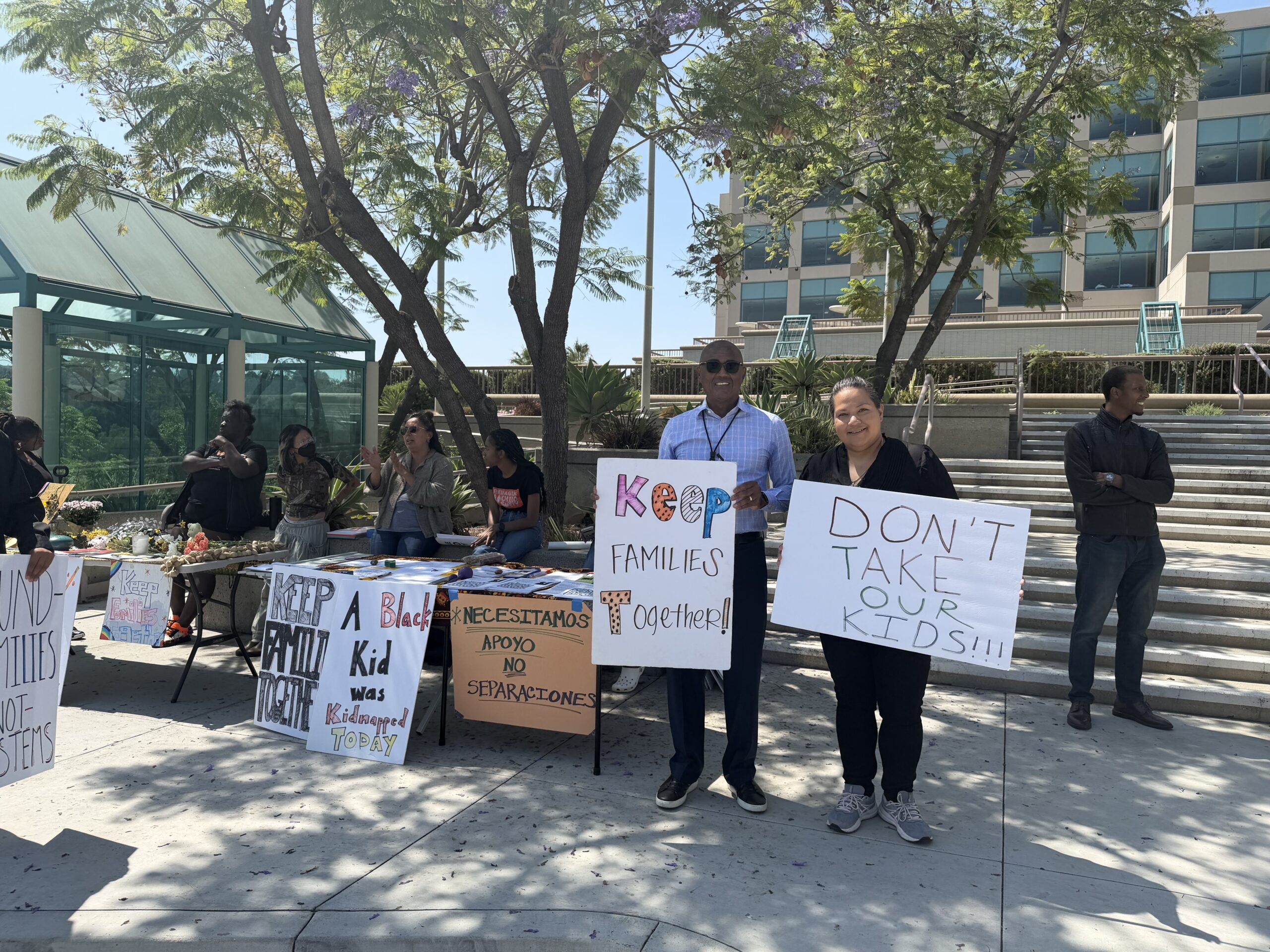
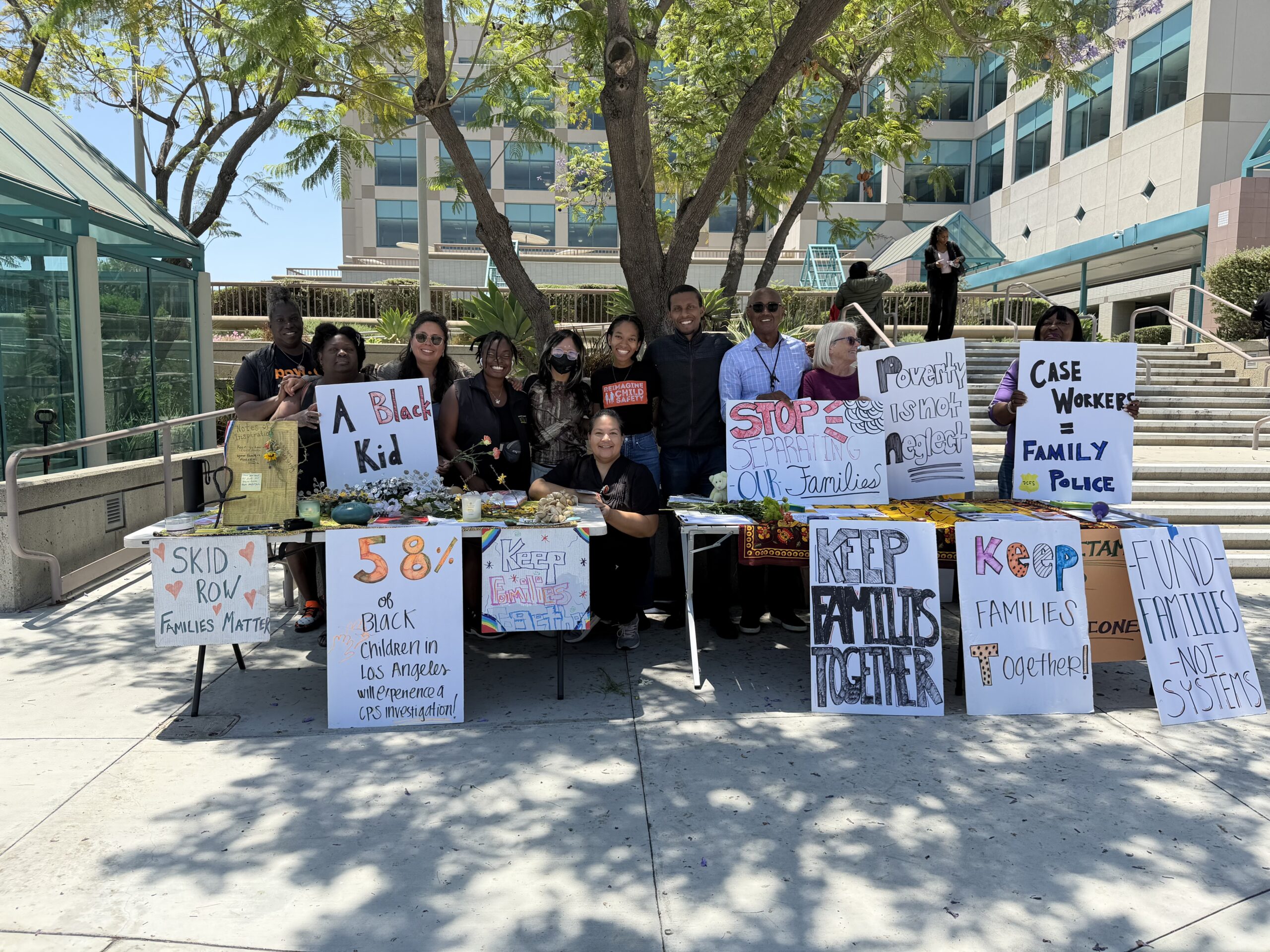
Keeping families together is a fight that requires us all.
In 2020, a group of activists, lawyers, community members, parents and individuals impacted by the family policing system formed the Reimagine Child Safety (RCS) coalition. On the coalition’s website, they state they envision “a world in which all communities and families have the resources and support that they need to thrive; a world in which the safety of children is not determined by the economic status of their families, and parents are not deemed ‘unsafe’ or ‘unfit’ based on the color of their skin.”
A year after the coalition's founding, a shift took place in the southland. According to The Imprint, now when a family is reported to CPS or DCFS due to precarious housing or food access, the county refers them to food banks and temporary housing instead of triggering an investigation into their children's welfare. Public hospitals no longer report new parents and mothers for drug use. And in 2022, RCS's advocacy led the Los Angeles County Board of Supervisors to introduce a motion for pre-petition representation, an approach that provides parents with free legal counsel before a child welfare agency files against them in court. The results from this region-wide shift away from family separation are astounding.
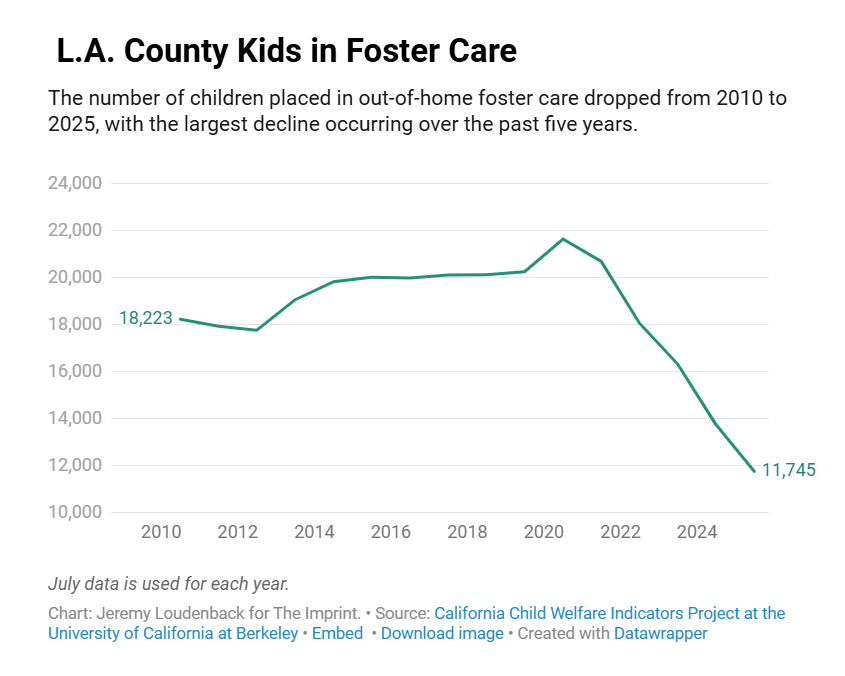
Source: The Imprint
Although this decline in children entering the family policing system can be attributed to multiple factors, I have no doubt the resilience and boots-on-the-ground advocacy of the Reimagine Child Safety coalition and similar groups lead the charge.
As we close out the second annual Stolen Children’s Month, we’re shining a light on those shepherding us into a better future, the future our ancestors dreamed of and our communities deserve, a future where families remain together.
To All of Us Or None Orange County, Black/Jewish Justice Alliance, Black Lives Matter Los Angeles, Black Los Angeles Young Democrats, Black Women for Wellness, BreastfeedLA, California Families Rise, California Latinas for Reproductive Justice, Cancel the Contract Antelope Valley, CASA LA, Collective for Liberatory Lawyering (C4LL), Community Coalition, Dignity & Power Now, Family Justice Tribe, Family Reunification, Equity & Empowerment (FREE) /Starting Over Inc., Fannie Lou Hamer Center, Harambee Ministries, HIVE, Justice LA Coalition, La Defensa, Los Angeles Dependency Lawyers, LA LGBT Center, Movement for Family Power, NAACP - Pasadena Chapter, Pregnancy Justice (formerly National Advocates for Pregnant Women), Project Amiga, Reimagine Child Safety Group, Root and Rebound, San Bernardino Free Them All, Shepherd’s Door Domestic Violence Resource Center, Starting Over, Inc., The RightWay Foundation, Trans LifeLine, Western Center on Law and Poverty, White People 4 Black Lives, Young Center for Immigrant Children's Rights, Youth Justice Coalition and the ACLU SoCal, thank you.
—We now hold that this constitutional interest in familial companionship and society logically extends to protect children from unwarranted state interference with their relationships with their parents. The companionship and nurturing interests of parent and child in maintaining a tight familial bond are reciprocal, and we see no reason to accord less constitutional value to the child-parent relationship than we accord to the parent-child relationship.
Smith v. City of Fontana (9th Cir. 1987)